
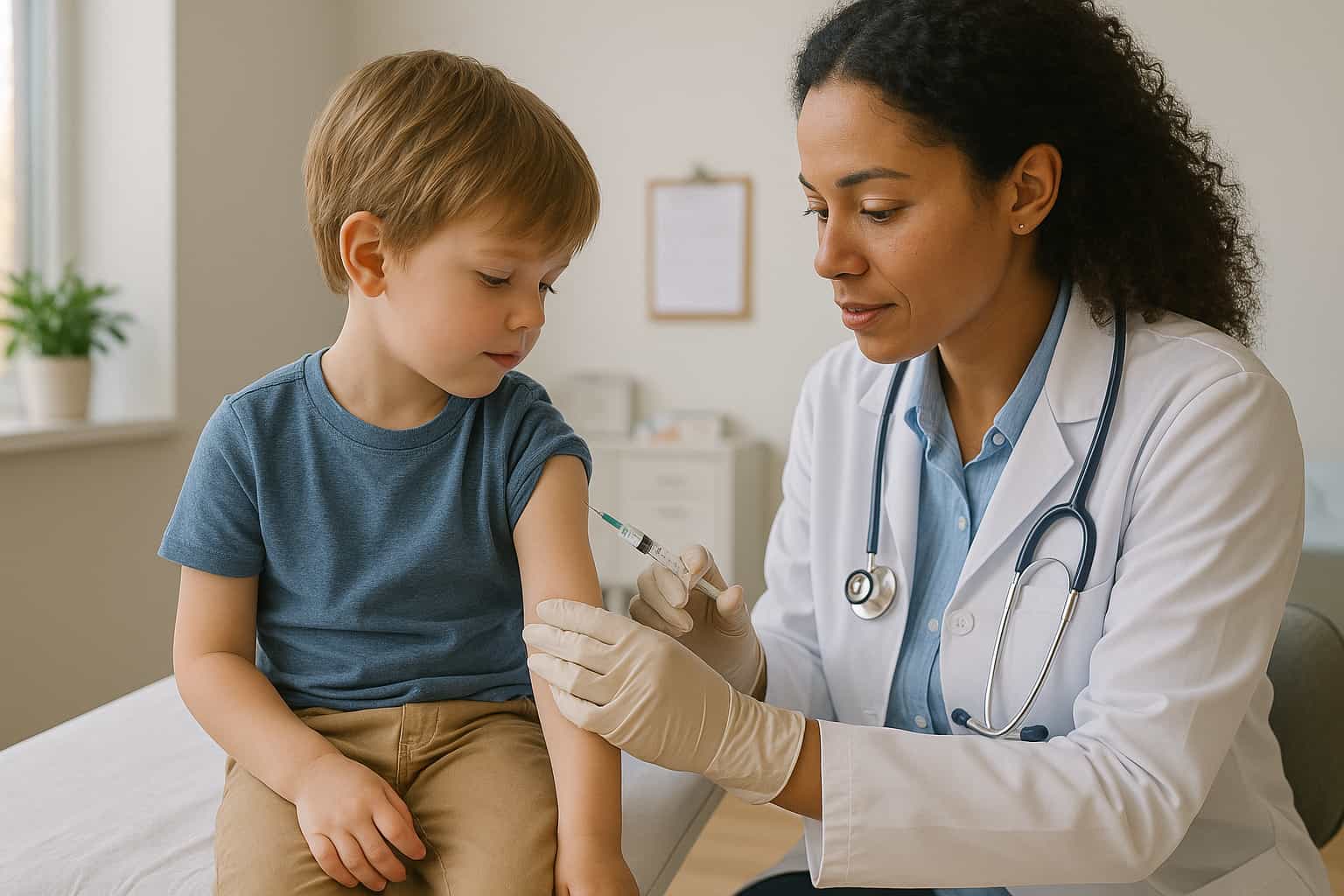
The childhood immunisation schedule outlines the vaccines children in Australia receive from birth to early school years. These vaccines protect against serious illnesses and help build strong immunity during the most vulnerable stages of life. Understanding the schedule helps parents stay prepared and ensures children receive protection at the right time.
Key Takeaways
- Australia’s childhood immunisation schedule begins at birth and continues through to 4 years old.
- Vaccines protect against serious diseases including measles, whooping cough, polio, meningococcal disease, and more.
- Staying up to date helps protect your child and the wider community through herd immunity.
- Immunisations are free under the National Immunisation Program.
- Your GP can explain each vaccine and provide personalised advice based on your child’s needs.
What Is the Childhood Immunisation Schedule in Australia?
The Australian childhood immunisation schedule is a series of recommended vaccines provided from birth through early childhood. These vaccines guard against diseases that can cause severe complications in babies and young children.
The schedule is set by the Australian Government and updated regularly based on the latest medical evidence. Each vaccine is timed to provide protection when children need it most, based on how their immune system develops.
For personalised care and guidance, explore our children’s health services at HealthMint.
When Do Babies Receive Their First Vaccines?
Most babies receive their first vaccines right after birth. These may include protection against hepatitis B and other conditions depending on individual risk factors.
Birth immunisation is an important first step in building early immunity and protecting newborns during the first months of life.
Which Vaccines Are Given at 2, 4, and 6 Months?
During early infancy, babies receive several combination vaccines at 2, 4, and 6 months. These typically cover:
- Diphtheria
- Tetanus
- Whooping cough (pertussis)
- Hepatitis B
- Polio
- Rotavirus
- Haemophilus influenzae type b (Hib)
- Pneumococcal disease
These vaccines help protect infants from severe illnesses that they’re most vulnerable to in the first year of life.
What About the 12 and 18-Month Vaccines?
At 12 months, children receive vaccines that protect against:
- Measles
- Mumps
- Rubella
- Meningococcal ACWY
- Pneumococcal booster
At 18 months, boosters strengthen immunity against:
- Measles, mumps and rubella (if required)
- Varicella (chickenpox)
- Hib
- Whooping cough
Boosters are essential — they reinforce earlier doses and provide longer-term protection.
What Vaccines Are Given Before Starting School?
Around 4 years of age, children receive another round of boosters before entering school. These vaccines target:
- Diphtheria
- Tetanus
- Whooping cough
- Polio
These help ensure children remain protected during early school years when exposure to illness increases.
If your child has missed any vaccinations, your GP can help arrange catch-up immunisations so they stay on track.
Are Childhood Immunisations Free in Australia?
Yes — most vaccines on the national schedule are free for children under the National Immunisation Program (NIP).
Your GP will record each vaccine in your child’s immunisation history, which is used for childcare, school enrolment, and government requirements.
What If My Child Misses a Vaccine?
It’s common for families to fall behind due to illness, travel, or life circumstances. A GP can create a personalised catch-up vaccination plan to help your child get back on track safely and efficiently.
Catch-up schedules are routine and adjust the spacing between vaccines while maintaining safety and effectiveness.
Why Are Childhood Immunisations Important for Community Health?
Vaccination doesn’t just protect your child — it helps protect vulnerable people who may not be able to receive some vaccines, such as newborns or those with weakened immune systems.
This protection, known as herd immunity, reduces the spread of infectious diseases and keeps the whole community safer.
Need Help Understanding the Schedule?
If you’re unsure about timing, missed vaccines, or what to expect at each appointment, our caring team can guide you through the process.
HealthMint’s GPs in Cranbourne North and Croydon provide child-friendly, supportive appointments to keep immunisations as smooth and stress-free as possible.
Book a childhood immunisation appointment
Disclaimer: This blog provides general health information and does not replace personalised medical advice. Please consult a qualified healthcare professional for guidance tailored to your child. HealthMint complies with AHPRA’s guidelines for advertising regulated health services.